

-
Peter Defreitas Trailer
-
Teaching Reining Horse to Rate
Teaching a horse how to rate should be done with finesse. Peter DeFreitas demonstrates how to correctly teach a reining horse to rate and troubleshoots some common problems that may arise.
-
Fixing Footwork in the Turn
Footwork problems in the spin usually happen when your horse is confused about where his feet should go. Peter DeFreitas helps troubleshoot these problems.
-
Mentally Preparing to Show in the Reining
Peter DeFreitas talks about he gets mentally prepared for a reining competition. Some of the strategies he uses include positive visualization and having an organized plan for each horse he's showing that day.
-
Go-To Reining Bits
Peter DeFreitas discusses his go-to reining bits and when he uses each one.
-
Lead Change Work with 3-Year-Old Reiner
Peter DeFreitas introduces a young futurity prospect and uses him to demonstrate how he works lead changes with his young horses. He details the basics of schooling changes—straightness and speed. Peter also discusses counter-canter work.
-
Teaching Young Reining Horse to Turn
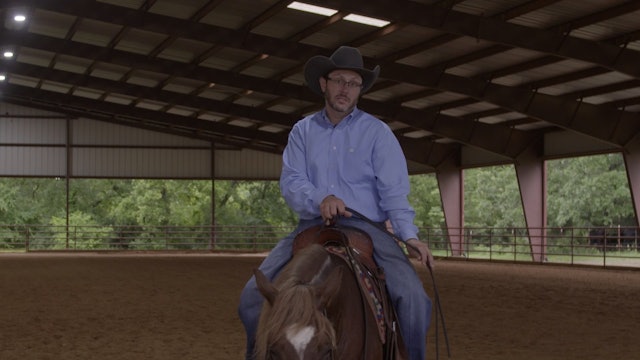
Building off the sidepass exercise, Peter DeFreitas demonstrates how he starts teaching young reining horses how to turn. He focuses on keeping his horse square and between his legs so that the turn stays tight and organized.
-
Turning 3-Year-Old Reining Horse
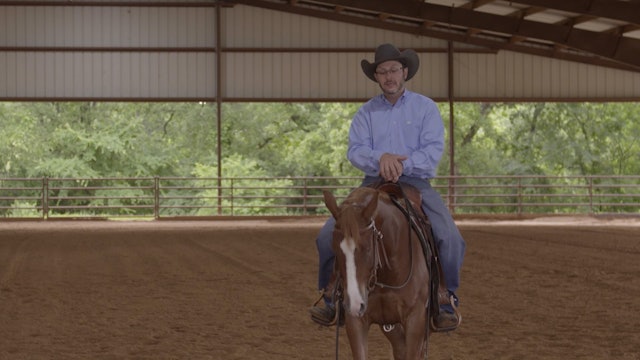
Peter DeFreitas explains the main differences between schooling 2- and 3-year-olds. As 3-year-olds, Peter starts fine tuning his cues so he has more ways to help his horses through maneuvers.
-
What to Look For in Reining Horse Prospects
There are several different qualities Peter DeFreitas looks for in his reining horse prospects. He discusses what he looks for in terms of temperament, rideability, and conformation in his colts and fillies.
-
Training at Your Horse’s Own Pace
Letting your horse progress and develop at his own pace is an important part of good horsemanship. Peter DeFreitas talks about his experiences working young horses that progressed at very different rates.
-
Teaching Young Reining Horse to Stop
Peter DeFreitas demonstrates his process for teaching a young reining horse to stop. He explains the foundation work that should be done at the jog first, then uses his horse to demonstrate what schooling the stop at the lope looks like. He also discusses what the stops should look and feel like ...
-
Improving Lead Departure with Young Reining Horse
After warming up his young reining horse, NRHA professional Peter DeFreitas demonstrates how to improve lead departures. He points out that his horse's head set at this point is secondary to keeping her even and in between his hands and legs.
-
2-Year-Old Reining Prospect Warm Up
NRHA professional Peter DeFreitas discusses the warm-up routine he uses for young reining prospects. He notes a few specific exercises he starts with and how the horse should feel before he moves on to more advanced work.
-
Going Around the Ends of the Arena
Peter DeFreitas explains the importance of riding your horse around the ends of the arena.He demonstrates a drill he likes to use to help keep his horse's shoulders straight and her neck in the correct position as he makes a turn.
-
Teaching Young Reining Horse to Move Off Your Leg
Peter DeFreitas demonstrates how he starts teaching his young reining horses to side pass. He explains how and why he uses the fence lines to help facilitate the exercise as well as when to use your leg and rein aids.
-
Using Different Cues for Reining Transitions
Peter DeFreitas works with a 4-year-old horse that will be shown by a non-pro and discusses how he uses different cues to help the horse's rider communicate with him more effectively.
-
Fencing a Reining Horse
Peter DeFreitas explains the goal of fencing and how it can help tune up your horse.
-
Dealing With Gastric Ulcers
Peter DeFreitas talks about how he helps keep his horses in training and on the road comfortable and free from gastric distress.