
The Complete Guide to Western Dressage
Western Dressage, rapidly gaining popularity in the equine community, blends traditional Western gear with classical dressage elements. Renowned trainer Tim Christensen introduces this unique discipline, tracing its origins and discussing his transition from all-around riding to Western dressage. In his instructional series, he delves into key concepts such as utilizing the letter X to delineate arena sections, mastering 20-meter circles, and navigating dressage patterns with precision. Christensen emphasizes proper techniques for circles, loops, and serpentines, guiding riders through exercises to enhance suppleness, transitions, and halts. From basic tests to maneuvers like turns on the haunches and forehand, he provides valuable insights into achieving harmony and precision in Western dressage performance.

-
Introducing Your Horse to Turns
Western dressage trainer Tim Christensen describes the ideal walk for the Western dressage. He shares what judges are looking for as well as what your horse's movement should look and feel like.
-
Lateral Movements
Watch as Western dressage trainer Tim Christensen demonstrates the turns you'll see in a Western dressage test.
-
The Walk in the Show Pen
Western dressage trainer Tim Christensen demonstrates the lateral movement necessary for the level 1 Western dressage test. He explains what to do if your horse looses forward momentum and shows lateral movement off both the right and left sides.
-
The Working Jog in the Show Pen
Mastering a nice forward, four-beat walk is key to a good Western dressage test. Western dressage trainer Tim Christensen demonstrates a correct walk on his Appendix mare and shares his tips for greating a great walk.
-
The Free Trot
Mastering a nice forward, working jog is key to a good Western dressage test. Western dressage trainer Tim Christensen demonstrates a correct working jog on his Appendix mare and shares his tips for creating a good jog.
-
The Working Lope
The free trot or "stretchy circle" is part of the basic and level 1 Western dressage test. im Christensen demonstrates how to ride the free trot correctly and what to work on while you're practicing.
-
The Lengthened Jog and Trot
The working lope is a forward moving lope with nice contact. Next is the lenghtened lope where you want your horse lengthen his stride while keeping the same mouth contact.
-
Exercise to Lengthen Strides
Tim demonstrates going from a regular jog and trot to an extended. In an extended trot or jog, the judge is looking for a clear change in gate with a noticable difference when you come back to the regular trot or jog.
-
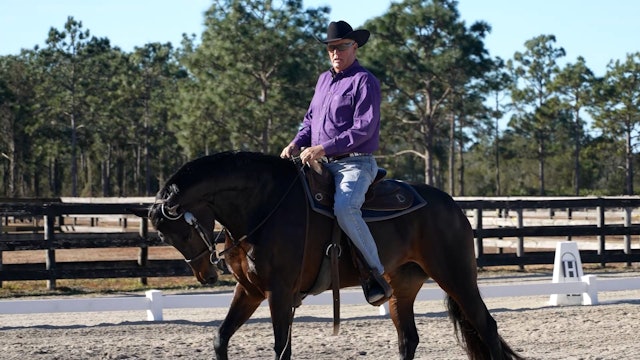
Talking Through Lengthening Strides
In this video, Tim gives you some exercises that you can do at home to lengthen your horse's stride. Lenghtening of the trot will be in the Level 1 tests and usually take place on the diagnol line. Tim gives you tips to make your transitions as smooth as possible.
-
Using Half Halts for Connection
Tim talks us through his every move when asking for a lengthened stride. He explains what he is asking for, how he is asking, and why.
-
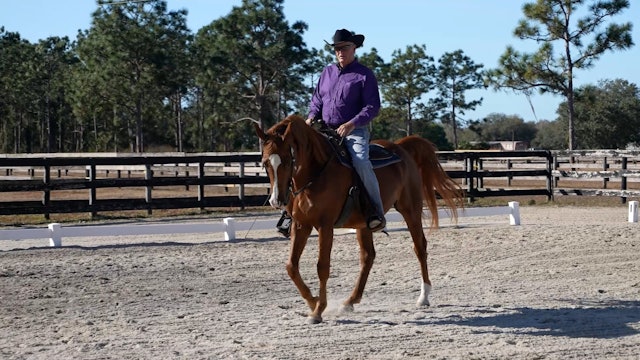
A Trick for Lengthening Strides at the Lope
Western dressage trainer Tim Christensen demonstrates how you can use half halts to get a better connection through your reins. He explains why this is beneficial for the Western dressage as well as many other disciplines.
-
A Demonstration of the Gaits with a Half Arabian/Half Trakehner
In this video, Tim shows us a trick for lengthening your horse's stride at the lope. This will help you improve your lengthened lope and the connection you have with your horse.
-
Using Logs to Create Balance
There are many different breeds of horses that compete in the Western dressage. Tim demonstrates the different gaits that you will see in a test on a Half Arabian half Trakehner horse.
-
Using Logs to Improve Circles
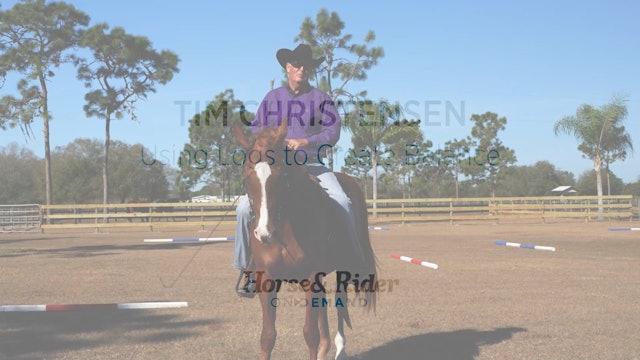
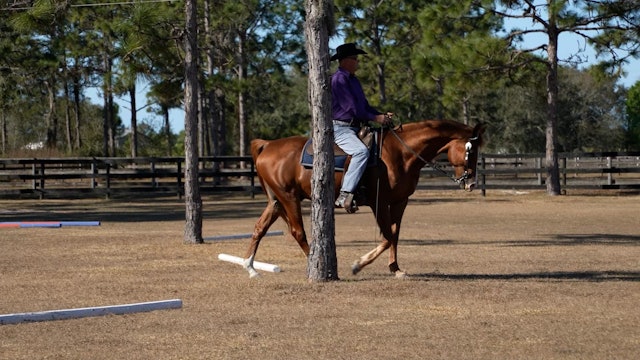
Although logs aren't used in Western dressage, Tim shows us how we can use them to help improve your horse's balance. He demonstrates a few different tricks you can do at home with poles or logs.
-
Using What You Have at Home for Training Exercises
Similar to using logs for balance, Tim also shows us how to use them for improving your circles. He sets up poles in a 20 meter circle and explains how to use them to create a pretty and even circle.
-
Exercises to Loosen Your Horse Up
Tim Christensen demonstrates some exercises you can do to help loosen your horse's muscles up before a ride. These will help your horse warm up properly and keep him supple and limber.
-
Introducing Your Horse to Moving Off Your Leg
Tim demonstrates some exercises you can do to help loosen your horse's muscles up before a ride. These will help your horse warm up properly and keep him supple and limber.
-
Teaching a Horse to Turn on the Haunches
In this video, Tim explains what it means to have your horse move off your leg. He demonstrates this maneuver and tells you why it's an important tool to have.
-
Teaching a Horse to Turn on the Forehand
Tim walks us through teaching a horse to turn on the haunches. He shows us what it should look like and some struggles you might run into while teaching the maneuver.
-
Slow and Steady Wins the Race
Tim walks us through teaching a horse to turn on the forehand. He shows us what it should look like and some struggles you might run into while teaching the maneuver.
-
Exercises to Improve the Free Walk
In this video, Tim explains why it's important to not rush your horse when working on specific maneuvers. He says slow and steady will win the race in the end.
-
Improving Transitions
Tim shows us some exercises we can do to improve our free walk. This is one of the most important elements of a Wesern dressage test, and can be one of the most difficult for a horse to learn.
-
Teaching a Horse Their Leads
Tim goes over what a smooth transition should look like in Western dressag. Then, he goes over some ways that you can improve your horse's transitions to help boost your score and have better control.
-
Learn to Improve Your Halt
In Western dressage, your halt is one of the most important maneuvers. Tim demonstrates what a proper halt should look like and what the judges want to see from your horse. Then, he gives you tips for improving your horse's halt.